
When we think about open-air evangelism, we probably don’t think about the first Bishop of Liverpool—but perhaps we should! J. C. Ryle’s life and ministry offer valuable lessons that remain relevant to our work today. Here are four helpful “Ps” to consider:
1. Practical Organisation
J. C. Ryle was consecrated Bishop of Liverpool on 11th June 1880 at the age of 64, with much of his active ministry already behind him. Towering over 6ft 2in and sporting a full white beard, he was an imposing figure. But it wasn’t just his appearance that made an impression. The Manchester Guardian, writing earlier that year, described him as:
“One of the ablest, soundest, and most practical clergymen in the Church of England.”
Though deeply spiritual, Ryle’s strength in practical matters offers our first lesson. In his youth, he was an outstanding cricketer—captain of the Oxford University team—and once took all ten wickets in a Varsity Match against Cambridge at Lord’s.
Later in life, overseeing the newly formed Diocese of Liverpool, he looked back and said:
“I believe it gave me power of commanding, managing, organising and directing—using every man in the part for which he is best suited.”
Whether organising a single open-air outreach, a Bible exhibition, a week-long team event, or a beach mission, we do well to take that final phrase as our guide to best practice.
2. Personal Providences
Ryle was born on 10th May 1816 at Park House, Macclesfield—now long gone, though “Ryle’s Pool”, a small lake in South Park, remains. His father was a well-known and wealthy man—at one point even serving as local MP. Ryle’s upbringing was one of comfort and privilege. His family’s wealth, by today’s standards, would be measured in the billions.
But disaster struck. A complete financial collapse ruined the family and changed the course of Ryle’s life. He later wrote:
“My grandfather was the only Ryle who ever attained great wealth in Cheshire—and my father was the Ryle who left Cheshire after losing every penny of it.”
This experience left a deep mark on Ryle’s preaching. In one sermon, he said:
“Banks may break and money make itself wings and flee away, but the man who has come to Christ by faith will still possess something which can never be taken from him.”
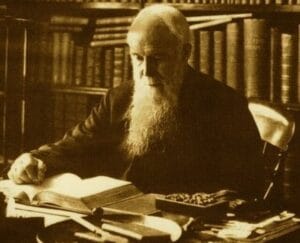
Our second lesson is this: God often uses trials—personal and painful—as tools to shape our gospel witness. Like Ryle, we may find that what breaks us becomes what makes our message more authentic and powerful.
God often uses trials—personal and painful—as tools to shape our gospel witness.
3. Plain Language
Ryle’s third lesson to us comes from his early struggles in pastoral ministry. Though highly educated—with time at Eton and Oxford studying Classics—he found that his polished vocabulary didn’t connect with his parishioners in rural Suffolk. Reflecting on this, he wrote:
“I was doing the country people of my parish no good whatever. I was shooting over their heads… They could not understand my style, which I thought much of. Therefore, I thought it my plain duty to crucify my style and bring it down to what it is now.”
…his polished vocabulary didn’t connect with his parishioners in rural Suffolk.
This is an especially timely lesson for today’s preacher. Whether in the pulpit or in the open air, we must be understood. Ryle began to simplify his messages with clear divisions and memorable headings, enabling him to preach with only minimal notes.
His biographer Eric Russell wrote:
“There was a strong personal quality about Ryle the preacher. He had a dignified presence and an earnest manner, and spoke in plain, simple English. He avoided long, complex sentences, and his short, pithy utterances were remembered long after.”
C. H. Spurgeon thought so highly of Ryle’s essay Simplicity in Preaching (from The Upper Room) that he urged every student of preaching not only to read it—but to memorise it!
One humorous anecdote says it all. A woman once attended a service in Liverpool shortly after Ryle became Bishop. She remarked afterward:
“I never heard a Bishop before. I thought I’d hear something great. He’s nowt! He’s no Bishop—I could understand every word!”
We may smile at her bluntness—but Ryle himself considered it the finest compliment he ever received!
The challenge stands: Do our hearers understand every word? Too often, our gospel messages are filled with jargon and theological complexity. Ryle reminds us to speak simply, clearly, and memorably.
4. Printed Tracts
Finally, we cannot ignore Ryle’s powerful ministry through the printed word. He authored over 200 gospel tracts, with more than two million copies distributed. Some are still in print today and rightly described as “pure gold”. His titles were punchy and Christ-centred: Only One Way, Christ is All, Looking Unto Jesus, Able to Save.
As a Mission, we follow his pattern. Some of Ryle’s content may seem a bit old fashioned, but in his day these tracts were right-on-the button! Our task today is to write, print and distribute tracts conveying the same unchangeable gospel in modern language, and right on-the-button with today’s society. Never forget to have some handy – even when we are “off duty” from Mission events!
We thank God for this remarkable man. A good biography of J. C. Ryle is well worth reading—there is much to learn from his life and ministry. May his example help us to preach Christ with plainness and practical wisdom!